Paediatric Surgical Care for Newborns, Children and Adolescents
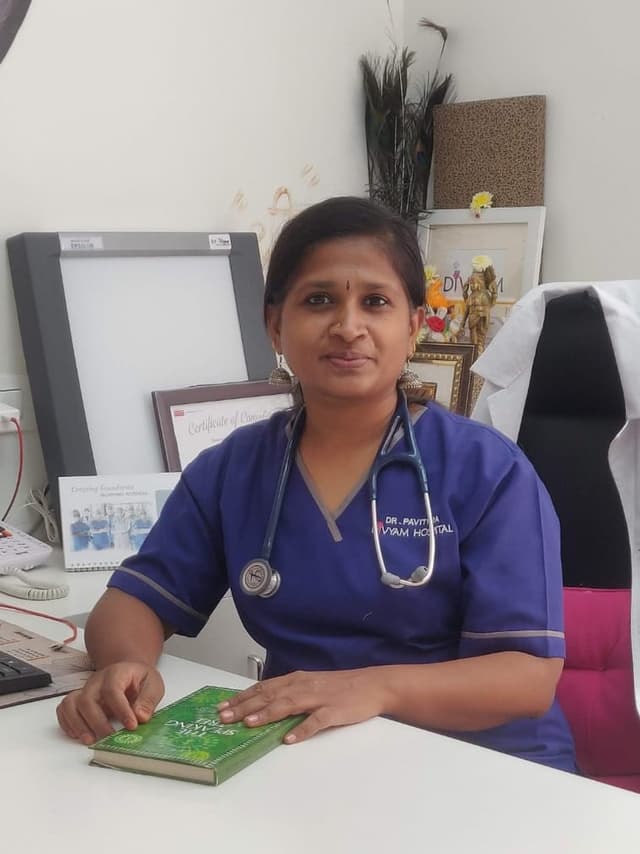
Hi, I’m Dr Pavithra
MBBS · DNB Paediatric Surgery · FMAS
17+ yrs experience
2500+ surgeries
50000+ consultations
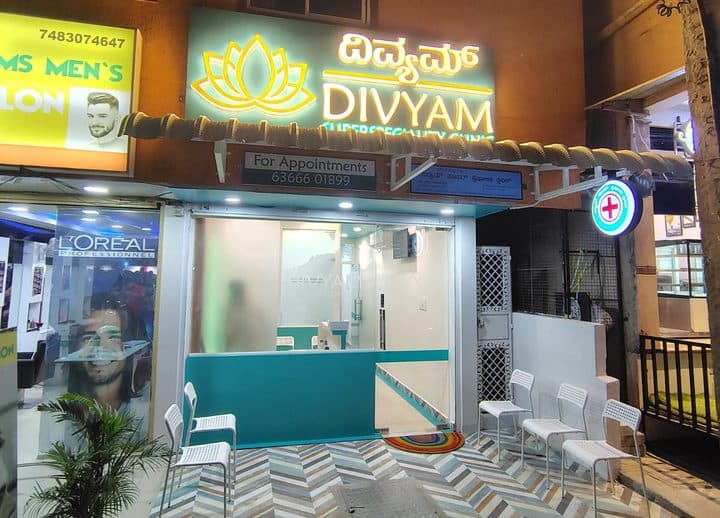
No. 12/13/11-1, Arekere Main Road, Bannerghatta Rd, Bengaluru, Karnataka 560076 Monday to Saturday · 5:00 – 8:30 PM Open in Maps
Gentle, child-first care from newborn to teen
Dr Pavithra Venkataswamy is a super-speciality paediatric surgeon and Medical Director of Divyam Hospital, Magadi. She brings careful evaluation, clear explanations and calm, honest guidance — so families feel supported and unhurried at every step.
Words from parents we have cared for
Every family arrives with worry. Most leave with understanding — and that matters as much as the surgery itself.
“She explained everything so calmly that we finally understood what our son actually needed. We never felt rushed into surgery.”
“We were terrified after the first hospital mentioned an operation. The second opinion changed everything — clear, honest and kind.”
“Our newborn needed surgery within days of birth. Dr Pavithra guided us through every step with such reassurance.”
“The keyhole appendix surgery meant our daughter was back at school in a week. We are so grateful for the gentle care.”
“She explained everything so calmly that we finally understood what our son actually needed. We never felt rushed into surgery.”
“We were terrified after the first hospital mentioned an operation. The second opinion changed everything — clear, honest and kind.”
“Our newborn needed surgery within days of birth. Dr Pavithra guided us through every step with such reassurance.”
“The keyhole appendix surgery meant our daughter was back at school in a week. We are so grateful for the gentle care.”
Healing hands, accessible care
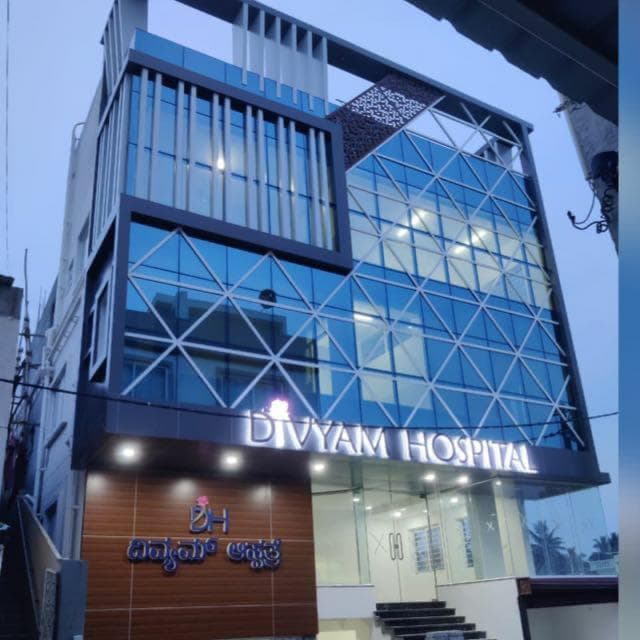
Founded in 2021 by Dr Pavithra Venkataswamy in Magadi Taluk, on the Bangalore–Ramanagara border, the clinic was built on a simple but powerful premise: every child deserves world-class healthcare, regardless of their background. We also own and run Divyam Hospital, Magadi — a full multi-speciality hospital serving the wider community.
We specialise in making advanced medical treatments affordable for all families.
Affordable paediatric surgeries
Specialised surgical care at just 20% of the cost of a standard hospital in Bangalore.
Uncompromised expertise
Lower costs never mean lower standards — top-tier medical expertise and rigorous quality protocols on every case.
Accessible location
Just on the periphery of Bangalore — a serene, healing environment away from the city’s chaos.
A multi-speciality hospital too
Beyond paediatric surgery, we own and run Divyam Hospital, Magadi — a full multi-speciality hospital serving the wider community.
Available across Karnataka
Beyond Divyam Hospital, Dr Pavithra consults at leading hospitals and clinics — bringing specialist paediatric surgical care closer to families.
Arekere, Bannerghatta Road
Bengaluru
Multiple HospitalsFortis
Yashwantpur and BG Road, Bengaluru
MultispecialtyTrilife
Bengaluru
HospitalKangaroo Care
Ramanagara
Women & ChildrenTumkur
Tumkur
HospitalRamanagara
Ramanagara
HospitalChannapatna
Channapatna
HospitalHassan
Hassan
HospitalTiptur
Tiptur
HospitalKolar
Kolar
HospitalSigns worth a specialist opinion
Not every one of these means surgery — but each is worth a careful, unhurried evaluation. When in doubt, ask.
Frequently asked questions
Clear answers to the questions we hear most often before a consultation.
No. A consultation is an evaluation. Many children who see a paediatric surgeon do not need an operation. The purpose is to understand the condition and decide, together, on the safest and most appropriate plan.
Dr Pavithra cares for newborns, infants, children and adolescents. Some conditions are best evaluated in the first weeks of life, while others can be assessed at any age.
Please bring any referral letter, previous prescriptions, scans or reports, and a note of your questions. If your child has had earlier investigations, those results are very helpful.
Yes. Where appropriate, minimally invasive techniques are used to reduce pain, minimise scarring and speed recovery. The right approach is always chosen for the individual child.
You can request a second opinion through the clinic. Bring the current diagnosis, imaging and recommended plan, and you will receive an independent, unhurried review with no obligation.
Severe or persistent abdominal pain, ongoing vomiting, an inconsolable child, breathing difficulty, or a swelling that has suddenly become hard or painful all warrant urgent assessment. Call the clinic or go to the nearest emergency department without delay.
For referring doctors
Dr Pavithra welcomes referrals from paediatricians, general practitioners and physicians across the region. Referred families receive a prompt, considered evaluation and a clear communication back to you.
Referral conditions
Complete surgical care for little ones
From newborns to teenagers — a full range of paediatric surgical care, explained gently and honestly.
A surgical consultation does not always mean immediate surgery
Many children who are referred to a paediatric surgeon do not need an operation at all. The consultation is where clarity begins.
When a child may need surgery, parents naturally ask:
- ?Is surgery really necessary?
- ?Is it urgent?
- ?Are there other options?
- ?How will the child recover?
A consultation is an evaluation, not a decision made for you
Many children who are referred to a paediatric surgeon do not need an operation. A consultation is the moment to understand what is really going on.
Observation is often the right answer
Some conditions resolve on their own with time. Where watchful waiting is safe and appropriate, it will be recommended honestly.
When surgery helps, timing matters
If an operation is genuinely beneficial, the goal is the right procedure, at the right time — not the earliest possible date.
You leave understanding the plan
Every option is explained in plain language so you can make an informed decision for your child without fear or confusion.
Conditions we care for, explained clearly
Tap any condition to understand what it is, the signs to watch for, and how it is approached.
A hernia occurs when tissue pushes through a weak point in the abdominal wall, most often in the groin (inguinal) or at the navel (umbilical). In children, inguinal hernias are usually repaired to prevent complications, while many umbilical hernias close on their own.
Signs to watch for
- A soft bulge that appears when the child cries, coughs or strains
- Swelling in the groin or scrotum
- Discomfort that eases when the child is calm and lying down
Approach — Careful examination determines whether repair is needed now or can be safely planned. Repairs are typically day-care procedures with a quick recovery.
During development, the testis descends into the scrotum. When one or both do not, timely evaluation matters for future fertility and health. Surgery (orchidopexy) gently brings the testis into position when it does not descend on its own.
Signs to watch for
- An empty or under-filled scrotum on one or both sides
- A testis that can sometimes be felt higher up
- Noticed at birth or during routine check-ups
Approach — If the testis has not descended by around six months, a well-timed, minimally invasive procedure is usually recommended.
Hypospadias is a common birth condition where the opening of the urethra is on the underside of the penis. Reconstructive surgery restores normal function and appearance, and is planned carefully in the first years of life.
Signs to watch for
- The urinary opening is not at the tip
- A downward curve of the penis (chordee)
- An unusual appearance of the foreskin
Approach — A staged, meticulous surgical plan is created for the individual child, prioritising function, healing and long-term comfort.
Appendicitis is one of the most common surgical emergencies in children. Prompt evaluation is important, and treatment is usually a minimally invasive (keyhole) removal of the appendix with a short hospital stay.
Signs to watch for
- Pain that starts near the navel and moves to the lower right
- Loss of appetite, nausea or vomiting
- Fever and pain that worsens with movement
Approach — Timely assessment and laparoscopic appendicectomy where indicated, with careful post-operative care and rapid return to normal life.
Children can experience a range of urological conditions — vesicoureteric reflux, obstruction of the drainage system (PUJ obstruction), and recurrent urinary tract infections. Careful investigation protects the growing kidneys.
Signs to watch for
- Repeated urinary tract infections
- Pain, fever or changes in urination
- Antenatally detected swelling of the kidney
Approach — Structured evaluation guides whether monitoring, medication or surgery best protects long-term kidney health.
Neonatal surgery addresses conditions identified before or shortly after birth — intestinal, anorectal, chest and abdominal wall differences. These require gentle, specialised care and close coordination with neonatal teams.
Signs to watch for
- Antenatally detected findings on scan
- Feeding difficulty, vomiting or abdominal distension
- Visible differences noted at birth
Approach — Delicate, experience-led neonatal surgical care with meticulous planning and family-centred communication.
Super-speciality training, meticulous care and honest guidance
Six years of super-speciality paediatric surgical training, and Medical Director & Proprietor of Divyam Hospital — with a calm, honest approach for every family.
Four unhurried steps, from question to plan
Every consultation follows the same calm rhythm — designed to leave you understanding exactly where things stand.
Understanding
We begin by listening — to your concerns, the child's history and the story behind the referral. Nothing is rushed.
Examination
A gentle, child-friendly examination, with any necessary investigations explained before they are ordered.
Explanation
The findings, the options and the trade-offs are explained clearly, in plain language, with time for your questions.
Treatment Plan
Together we agree a plan — whether that is reassurance, observation, or a carefully timed procedure.
The right procedure, at the right time, for the right reason
Not every finding needs an operation, and not every operation needs to happen today. A good surgical decision balances the benefit of acting against the value of waiting.
Where surgery is truly indicated, the goal is a precise, minimally invasive approach that respects a child's growing body — the smallest intervention that solves the problem completely.
Where it is not, that is said plainly. Parents deserve a recommendation they can trust, whether it is to operate, to observe, or simply to be reassured.
Necessity before urgency
First we establish whether an operation is genuinely needed at all.
Least invasive that works
Keyhole and day-care techniques wherever they serve the child best.
Growth-aware timing
Procedures planned around a child's development, not the calendar.
Family at the centre
You understand every step, and you decide with full information.
A calm, unbiased second opinion
Being told your child may need surgery is unsettling. A second opinion is a considered, independent review of the diagnosis and the options — so you can proceed with confidence, whatever the decision.
Independent review
A fresh, impartial look at the diagnosis, imaging and recommended plan.
Clarity on options
Whether surgery, observation or an alternative approach fits your child best.
No pressure
Honest guidance with no obligation to have any procedure performed here.
Concerned about a possible surgical condition in your child?
Book an unhurried consultation, or reach the clinic directly. You will get a clear, honest answer — whether that means surgery, observation, or simple reassurance.
Emergency notice
For a suspected paediatric surgical emergency — severe abdominal pain, persistent vomiting, an inconsolable child, breathing difficulty, or a swelling that has suddenly become hard or painful — do not wait for an appointment. Call the clinic immediately or proceed to the nearest emergency department.